
For Doctors and heathcare teams
Clinician Guidelines
Frameworks, tools, and resources to support structured shared decision-making conversations in your practice.

Framework
The ALL BRAN conversation guide
The ALL BRAN framework structures SDM conversations across all medical settings. Each element prompts a specific part of the discussion — whether the decision involves surgery, a medical treatment, chemotherapy, a procedure, or a significant care planning conversation.
Ask about the patient’s goals, values, and priorities
Listen actively; invite family and carers
Learn what makes life meaningful
Explain likely benefits in plain language
Personalised risk discussion, not just statistics
Alternative (other) treatment pathways available
Natural progression / no treatment option
Document and share the agreed plan
What’s inside
Explore the form
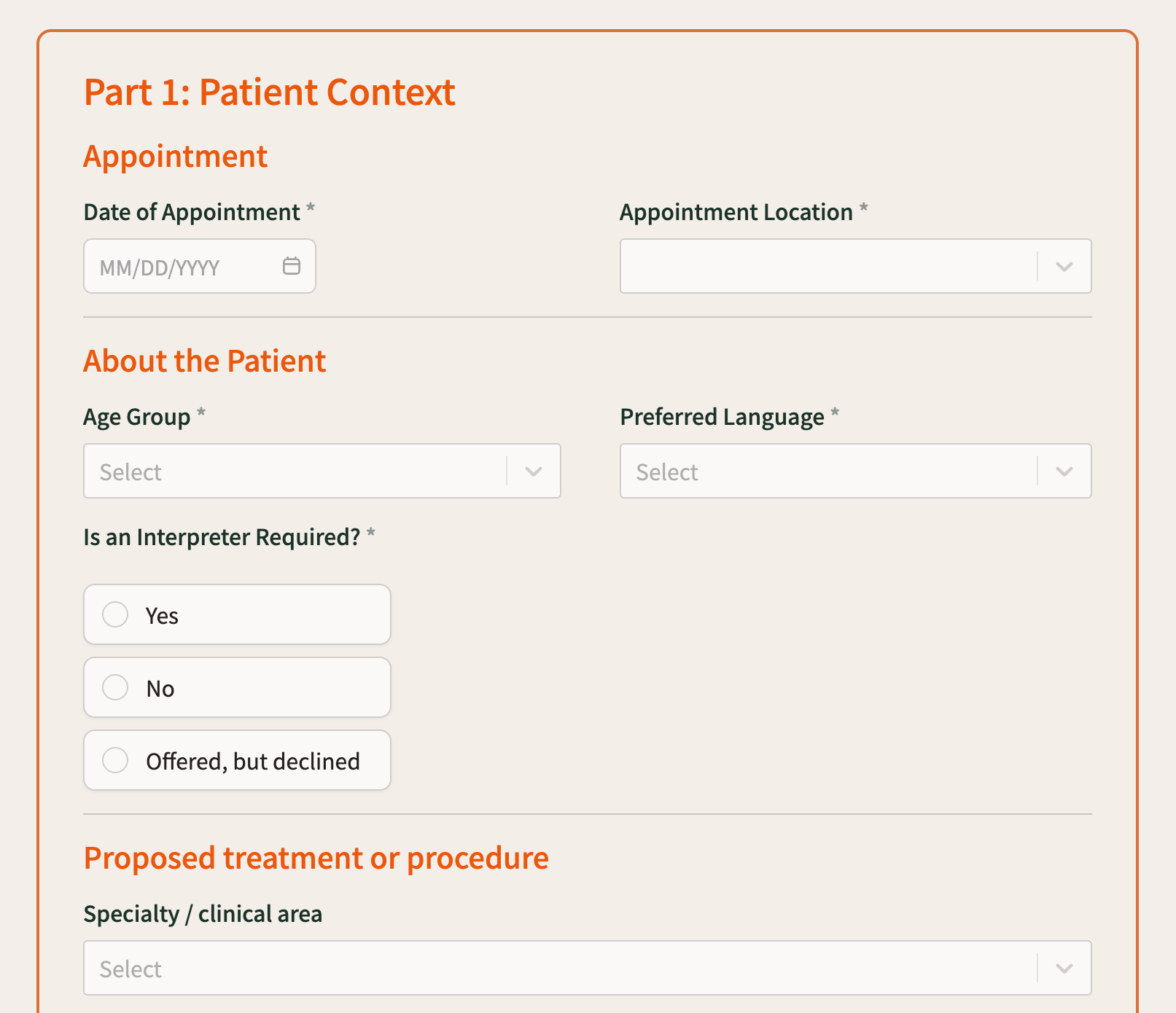
Part 1: Patient Context
Once you and the Patient understood and agreed that the SDM tool is designed to support the conversation and not replace the clinician conversation, Part 1 is to understand more about the Patient’s context.
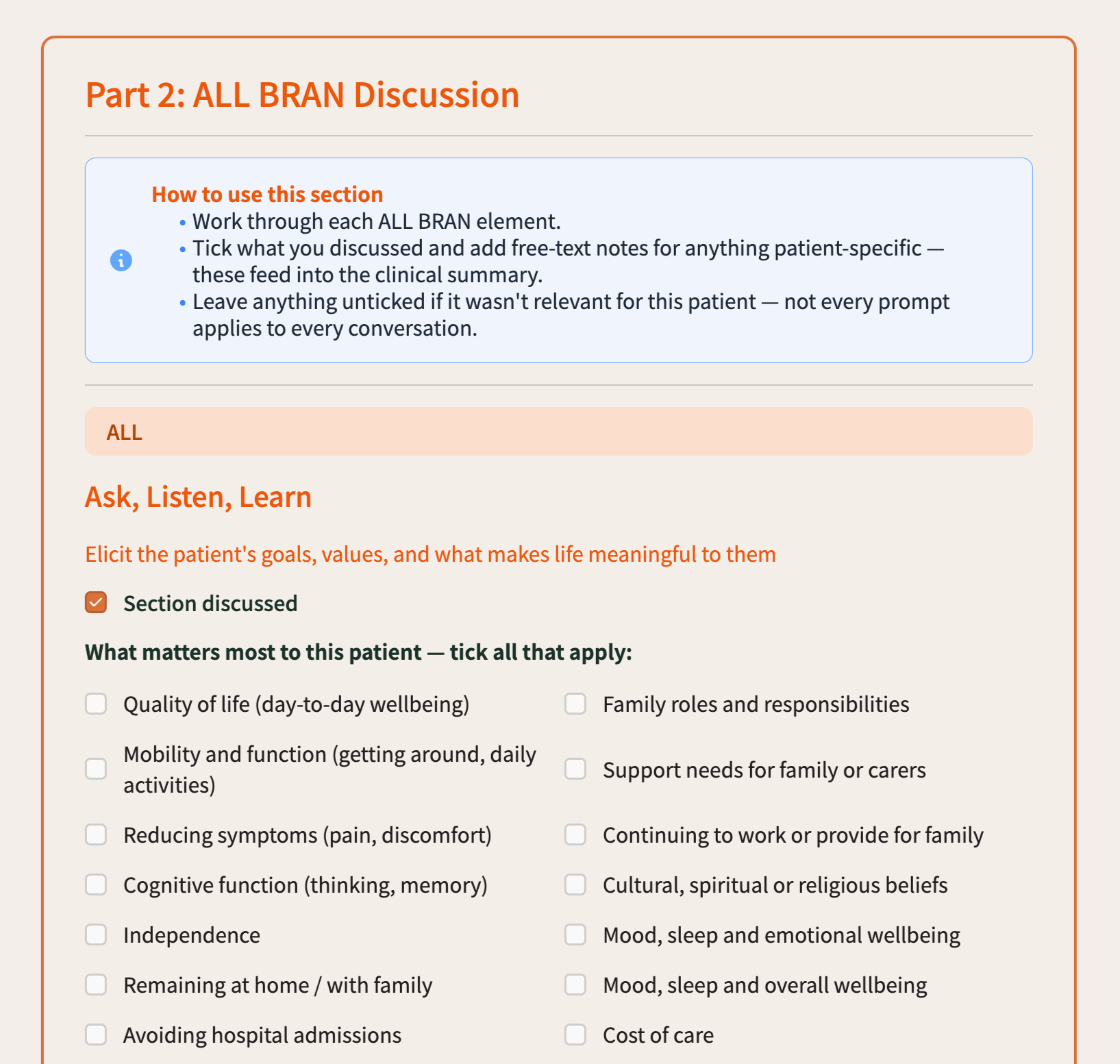
Part 2: ALL BRAN Discussion
Anchored in the ALL BRAN framework, this part of the conversation will be guided through prompts specific to Benefits, Risks, Alternatives and Natural progression and active management.
At the end of this section, you and the Patient would have agreed on a decision for how to move forward.
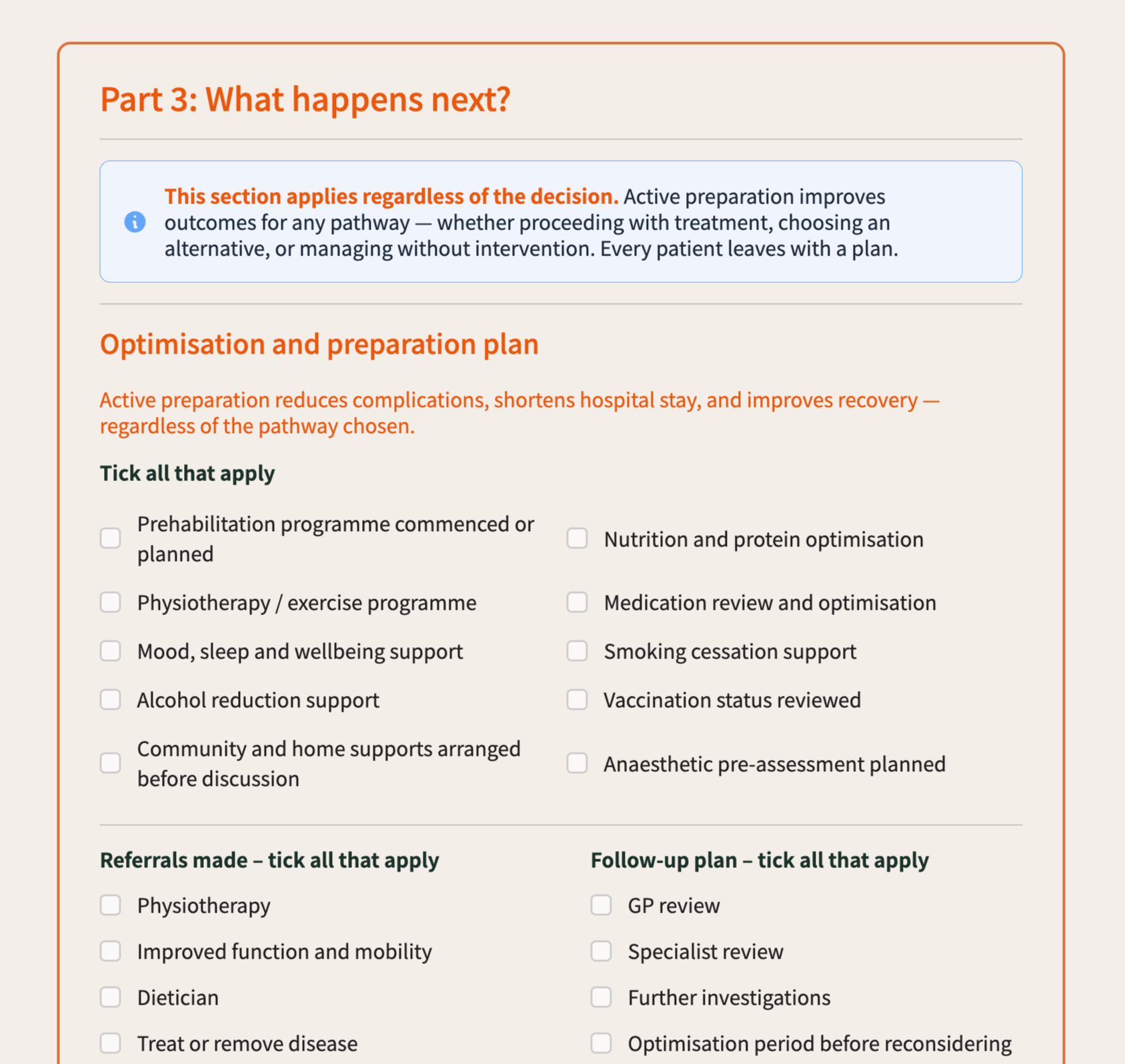
Part 3: Next Steps
Finally, you and the Patient go through the preparation plan ahead of putting the decision in place. Following this, the conversation summary is generated which can be printed or saved as a PDF.
Health literacy
Communicating clearly with patients
Many patients find medical information difficult to understand, particularly when under stress. These principles support effective communication across all health literacy levels.
Plain language principles
Use short sentences and common words
Avoid jargon and acronyms
Use teach-back to confirm understanding
Provide written summaries to take home
Limit to 3 key messages per conversation
Interpreter use
Always use a professional interpreter
Avoid using family members as interpreters
Book interpreter in advance where possible
Speak to the patient, not the interpreter
Confirm understanding at each steps
Older patients
Frailty and shared decision-making
Frailty increases the risk associated with medical treatments and interventions, making SDM particularly important. Patients with frailty benefit from goals-of-care discussions and may choose non-interventional pathways when fully informed.
Key considerations
Allow more time for the SDM conversations with older patients
Include carers and family with patient consent
Discuss goals of care, not just treatment options
Document the SDM conversation and decision clearly

Contact Us
Want to implement SDM in your service?
Get in touch with the SDM Navigator team at Blacktown Hospital.